
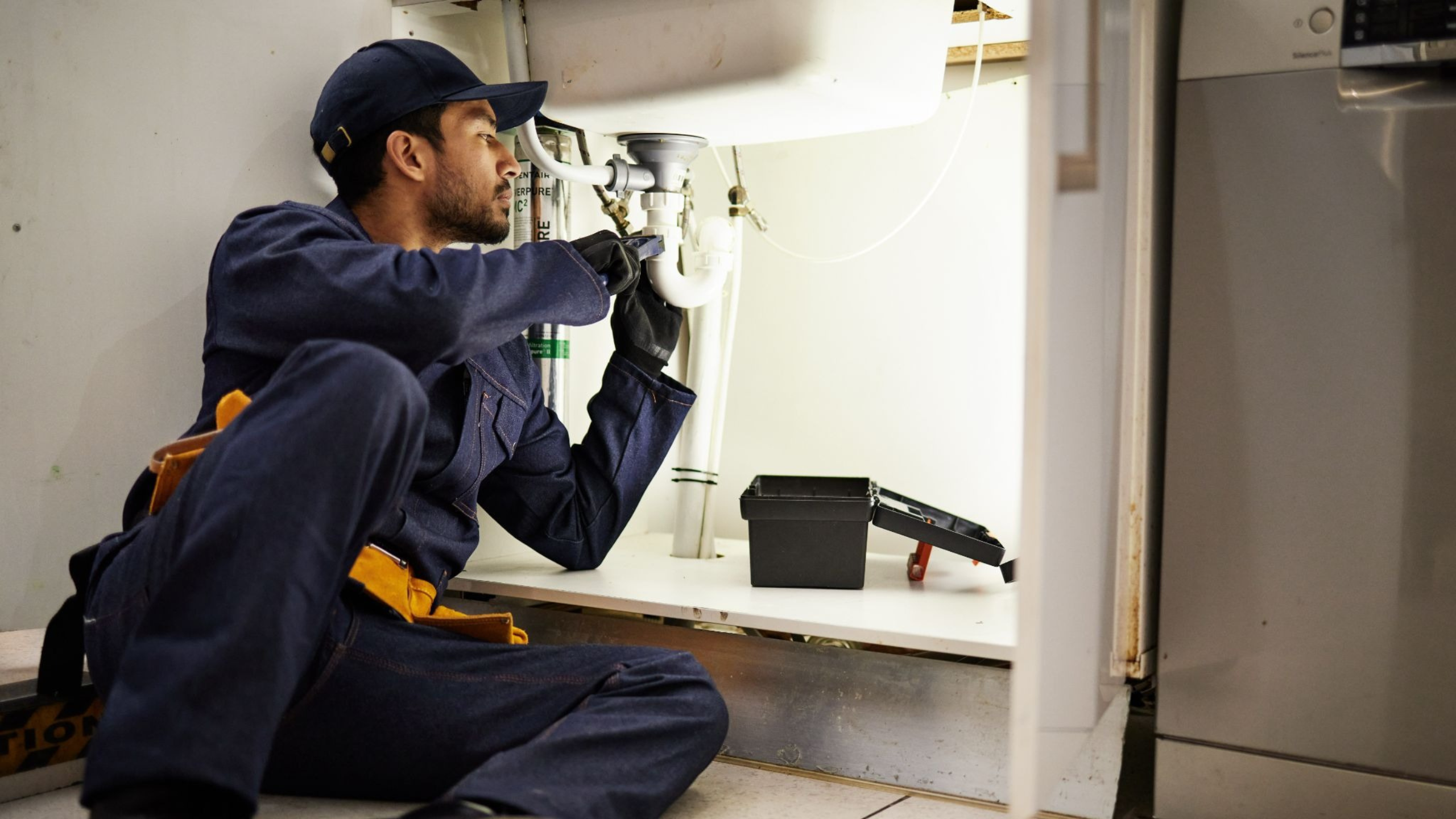


You notice a slow drip under your kitchen sink on a Saturday morning. The cabinet wood is starting to look a little warped. You want it fixed fast, so you open your phone and start looking for local help.
Your neighborhood Facebook group is full of recommendations for a local handyman who charges a very low hourly rate. Just below those posts, you see an ad for a licensed residential plumbing contractor.
Who do you actually call?
For many homeowners, the distinction doesn’t seem like a big deal. A wrench is a wrench. If someone knows how to tighten a pipe, why not save the money and skip the licensed contractor? A handyman can do plumbing work in California, but only inside a narrow legal exemption, and most of the jobs homeowners actually want done fall outside it. What separates the two isn’t just work quality. It is state licensing law, insurance liability, and the value of the asset you are letting them work on.
As local experts, the team at Best Service Plumber has been called out to fix hundreds of botched handyman jobs. In this guide, we explain where the legal line is drawn in California, what happens when you hire the wrong person, and how to know which professional you need for your specific home repair.
The California legal limit: $1,000, and two conditions most people miss
The biggest difference between a handyman and a plumbing contractor isn’t just a title. It is a legal boundary set by the Contractors State License Board (CSLB).
California Business and Professions Code section 7048 exempts small jobs from the licensing requirement. But the exemption is narrower than most homeowners realize, and it applies only when three things are true at once. The total price for labor, materials, and everything else must be less than $1,000. The work cannot require a building permit. And the person doing it cannot advertise as a contractor or employ anyone to help.
That last condition catches more people than the dollar figure does. A handyman who advertises his services, including in a neighborhood Facebook group, has arguably stepped outside the exemption, no matter what he charges. So has one who brings a helper. A permit also pulls a job outside the exemption, even when the bill is small, which is why a water heater replacement or a gas line move is never handyman work in California.
A licensed plumbing contractor holds a specific C-36 Plumbing License. This license proves they have passed rigorous trade examinations, submitted to state background checks, and proven years of journeyman-level experience. Because of this license, they have no financial limit on the size of jobs they can legally accept. They can legally repipe your entire home or dig up your main sewer line.
What a handyman can do, and where plumbing work begins
A good local handyman is worth having. They are the ultimate utility players. A handyman can patch a hole in your drywall, paint a bedroom, hang a heavy television on the wall, and swap out a basic light fixture all in the same afternoon. Their skill set is wide, but not very deep.
A licensed residential plumbing contractor is a specialist. They only do one thing, but they do it exceptionally well.
When you hire a licensed plumber, you are paying for an expert who understands the complex physics of residential water systems. They do not just know how to turn a wrench. They understand fluid dynamics, the chemical effects of Orange County hard water on different metal alloys, and how to properly vent sewer gases through your roof so your family does not get sick.
If you just need someone to install a simple showerhead you bought at the store, a handyman is perfectly fine. But if you have low water pressure throughout the entire house, a handyman will likely just guess at the problem. A specialized plumbing contractor knows how to diagnose the main pressure regulating valve, test the structural integrity of the pipes, and solve the root cause.
Insurance and liability: who pays when the work goes wrong
This is the area where homeowners take the biggest gamble.
When you invite someone into your home to work on pressurized water lines, you are introducing a serious risk. If a worker makes a mistake and a pipe bursts while you are at work, your home can sustain thousands of dollars in water damage in minutes.
- The Handyman Risk: Most independent handymen operate as sole proprietors. They rarely carry comprehensive general liability insurance, and they almost never carry workers’ compensation insurance. If a handyman forgets to seal a pipe joint and floods your kitchen, their personal bank account is the only thing backing up the mistake. Even worse, if they slip and break their leg in your bathroom, their medical bills could potentially fall on your own homeowner’s insurance policy.
- The Contractor Protection: Licensed plumbing contractors are legally required to carry heavy commercial insurance. A reputable company carries extensive general liability policies and full workers’ compensation for every single employee. If an accident happens, our insurance covers the damage completely. Your homeowner policy is never touched, and you have zero financial liability if one of our uniformed technicians gets hurt on your property.
Building codes and the permits a handyman cannot pull
California building codes are strict, and Southern California adds seismic and fire requirements on top of them. These codes exist to prevent fires, stop structural collapses, and keep municipal drinking water safe from sewage contamination.
An unlicensed handyman cannot legally pull a city building permit for specialized plumbing work. If you hire a handyman to move a gas line for a new stove or install a brand-new water heater in your garage, they are doing that work under the radar.
That creates a problem for you down the road. When you eventually sell your Orange County home, the buyer will hire a home inspector, and an inspector will quickly spot unpermitted, non-compliant plumbing work. You will then have to hire a licensed contractor to tear it out, pull the proper permits, and redo the job to code before escrow can close.
Licensed plumbing contractors know the local codes. They pull the permits, schedule the city inspectors, and build the job to the standard those inspectors are looking for, so the work passes and the permit closes out on your home’s record.
Handyman versus plumber: what each one brings to the job
You can learn a lot about a worker by looking at what they bring to the job site.
A general handyman usually operates out of a pickup truck with a few basic toolboxes. They have wrenches, screwdrivers, a basic plunger, and maybe a small hand-cranked drain snake they bought at a local hardware store.
A residential plumbing contractor drives a rolling warehouse. A professional service truck carries tens of thousands of dollars in specialized technology.
| Tool Category | What the Handyman Uses | What the Plumbing Contractor Uses |
| Leak Detection | Guessing, cutting exploratory holes in drywall. | Acoustic listening devices and thermal imaging cameras. |
| Drain Cleaning | Chemical liquids or cheap retail wire snakes. | Heavy-duty mechanical augers and high-pressure hydro jetting trailers. |
| Sewer Inspections | Cannot inspect underground lines. | Fiber-optic HD robotic crawler cameras with radio location tracking. |
| Parts Inventory | You have to leave your house to buy parts at a retail store. | Truck is fully stocked with commercial-grade brass and copper fittings. |
Quick guide: when to call a handyman and when to call a plumber
To make your life easier, keep this quick cheat sheet handy next time something breaks in your house.
Call a Local Handyman When:
- You need someone to replace a basic toilet seat or a plastic flapper.
- You need a new showerhead screwed on.
- You want a new vanity cabinet assembled and placed in the bathroom.
- The total price for labor and materials comes to less than $1,000, the job does not need a permit, and the person doing it is not advertising as a contractor or bringing a helper.
Call a Licensed Plumbing Contractor When:
- You have a hidden leak behind a wall or under your concrete slab.
- Your water heater is leaking, making popping noises, or needs replacement.
- Your main sewer line is backing up into your bathtubs.
- You need a gas line moved or repaired (never let an unlicensed worker touch natural gas).
- Your home has dangerously high water pressure.
Protect your Southern California home
Trying to save $50 by hiring an unlicensed handyman for a complex plumbing problem is a gamble that rarely pays off. Plumbing mistakes do not just look bad. They soak drywall, create the damp conditions mold needs, and ruin hardwood floors.
Your home is your sanctuary. It deserves respect and professional care.
At Best Service Plumber, we take our trade seriously. We are fully licensed and insured, and we know Southern California homes from the inside out. Our parent company, Plumbing Concepts, has installed plumbing in thousands of homes. Every technician who arrives at your door is a trained, background-checked plumbing professional.
We use flat-rate pricing, so you know the exact cost before we pick up a tool. No guessing, no hidden fees, and no amateur mistakes.
If you are not sure whether your project needs a licensed contractor, call us at 951-520-8557 and ask. We will tell you honestly, even when the answer is that a handyman can handle it.
Ready to hire a true professional for your home? Call us at 951-520-8557, or send the details through our contact us page.
Frequently asked questions
1. Can I just pull the building permit myself and have a handyman do the work?
Technically, yes, you can pull an “owner-builder” permit with your city. However, this is a serious risk. When you pull the permit under your own name, you legally become the general contractor for the project. You accept 100 percent of the liability. If the handyman does the work wrong and causes a gas leak or major flood, your homeowner’s insurance may deny the claim because a licensed professional didn’t do the work.
2. Are plumbing contractors always more expensive than handymen?
Not always. A handyman usually charges by the hour. If a handyman spends four hours struggling with a complex valve because they lack the right tools, the final bill can be surprisingly high. A professional plumbing contractor uses flat-rate pricing and carries tools that diagnose and fix the same valve in 45 minutes. The two bills often end up close, and the professional job gets done faster and cleaner.
3. What happens if I hire an unlicensed worker and they get hurt at my house?
You can be held responsible. If you hire an unlicensed worker and they fall off a ladder or cut their hand while working on your pipes, they can sue you directly for their medical bills and lost wages. Because they are not an official business carrying workers’ compensation insurance, an unlicensed worker can be treated as your employee rather than an independent contractor, and the liability lands on you. A licensed contractor carries that coverage, so you don’t have to.
4. Will a professional plumber fix the drywall they have to cut open?
Plumbers are experts at pipes, not drywall. If a plumber has to cut a small access square in your wall to fix a leaking shower valve, they will repair the pipe perfectly. However, most dedicated plumbing contractors don’t do drywall patching, texturing, or painting. They will leave the site clean and tidy, but you will usually need to hire a drywall specialist (or a good handyman) to close the wall back up once the pipes are dry and tested.
5. How do I verify if a plumbing contractor actually has a valid license?
California makes this easy to check. Every legitimate plumbing company must print its CSLB license number on its work trucks, business cards, and website. You can go to the official Contractors State License Board website, enter that number, and instantly see whether the license is active, suspended, or subject to any pending legal action.
6. Does homeowner’s insurance care who fixes a broken pipe?
Yes. If you file a major water damage claim, the insurance adjuster will ask for proof that the broken pipe was repaired correctly before they write a check for the restoration work. If you hand them an invoice written on a napkin from an unlicensed handyman, the insurance company might raise red flags. A detailed, professional invoice from a licensed plumbing contractor shows the insurance company the problem was resolved to code.