


You are standing in the shower, getting ready for work, when you notice the soapy water slowly rising around your ankles. Instead of a relaxing start to your morning, you are suddenly standing in a puddle of dirty water.
You finish your shower, step out, and check back ten minutes later. The water is still sitting there, draining at a crawl.
Most homeowners treat drain care as a purely reactive chore. We ignore the pipes until a sink completely clogs or a toilet backs up onto the floor, and only then do we scramble to call a plumber.
But what if you treated your plumbing the same way you treat your car? You don’t wait for your engine to blow up before you change the oil. You schedule routine maintenance to keep everything running smoothly.
So, where does drain cleaning fit into that schedule? Is drain snaking a routine checkup you should book every year, or is it strictly an emergency procedure for when things go wrong?
As local plumbing experts who spend every day working in older neighborhoods across Orange County and Riverside, we have seen the good, the bad, and the completely flooded. In this guide, we will break down exactly how often you should have your drains snaked, the warning signs you shouldn’t ignore, and how to keep clogs from forming in the first place.
The Short Answer: What is the Normal Schedule?
For the average residential home with no major underground pipe defects, you should have your main sewer line and heavy-use branch drains professionally snaked once every 1 to 2 years as a preventative maintenance measure.
If you stick to that 18-to-24-month timeline, you will catch slow-building blockages like grease film, hair clumps, and early tree root intrusions before they turn into a total pipe blockage.
Every home is different, though. A newer build in Irvine might go three or four years without needing a mechanical auger, while a 1960s ranch home in historic Riverside may need annual service just to keep the sewer line flowing. Your actual timeline depends heavily on the age of your pipes, your daily habits, and what is growing in your front yard.
Warning Signs You Need Drain Snaking Right Now
Throw the calendar out the window if your plumbing is acting up. If you notice any of these warning signs, don’t wait for your scheduled maintenance your pipes are asking for help today.
1. The Standing Water Shower
If you take a shower and find yourself standing in two inches of water, or if your kitchen sink takes five minutes to empty after doing the dishes, a clog is actively forming. A slow drain is never just “one of those things.” It is a physical wall of hair, soap scum, and grease that is getting thicker every single day.
2. The Multi-Fixture Backup
This is a major red flag. If you flush your master bathroom toilet and suddenly hear water gurgling up in your bathtub drain, you do not have a simple toilet clog. You have a blockage deep in your home’s main sewer line. When wastewater hits that blockage, it has nowhere to go but backward, popping up in the lowest drain point in your home.
3. Rotten Smells That Refuse to Leave
If your kitchen or bathroom smells like a dumpster even after cleaning the sink basin, the odor is coming from inside the pipe. Food scraps, grease, and hair decay inside the dark, damp environment of your drains. When that organic matter builds into thick sludge, it releases sewer gas that drifts back up into your living space.
4. Strange Gurgling or Bubbling Noises
Your drains should be completely silent. When a pipe is heavily choked with debris, trapped air has to fight its way past the water and the clog to escape. That struggle creates a distinct “glug-glug-glug” sound coming from your sink drains or toilet bowls.
Why Southern California Homes Need Special Attention
Living in Southern California comes with environmental challenges that directly affect how often you need drain service.
The Hard Water Problem
Water in Orange County and Riverside County is famously hard, loaded with high levels of calcium and magnesium minerals. As this water flows through your drains, it leaves behind a chalky mineral crust called scale.
Over a few years, that scale makes the interior of your pipes rough and porous. Instead of hair and soap gliding smoothly down the drain, they get snagged on the rough walls. Clogs build up much faster here than in areas with naturally soft water a reality we see in homes across the region every single day.
Aggressive Tree Root Intrusions
We love the mature sycamore, oak, and eucalyptus trees throughout Southern California neighborhoods. But during our dry summer months, those roots get thirsty. They will hunt for underground moisture wherever they can find it.
If your home has older clay or cast-iron sewer pipes, tree roots will squeeze through tiny cracks and grow inside your sewer line. Once inside, they act like a net, catching toilet paper and waste until the pipe is completely choked off. Having worked in these communities for years and having installed the original plumbing in many of these neighborhoods through our parent company we know exactly which pipe types are most at risk and how fast those roots come back. If you have large trees near your sewer line, annual drain snaking is the smart move.
What is the Difference Between Snaking and Hydro-Jetting?
When you call a professional to clear your drain, they usually have two main tools: a mechanical drain snake and a hydro-jetter. Homeowners often ask which one they actually need.
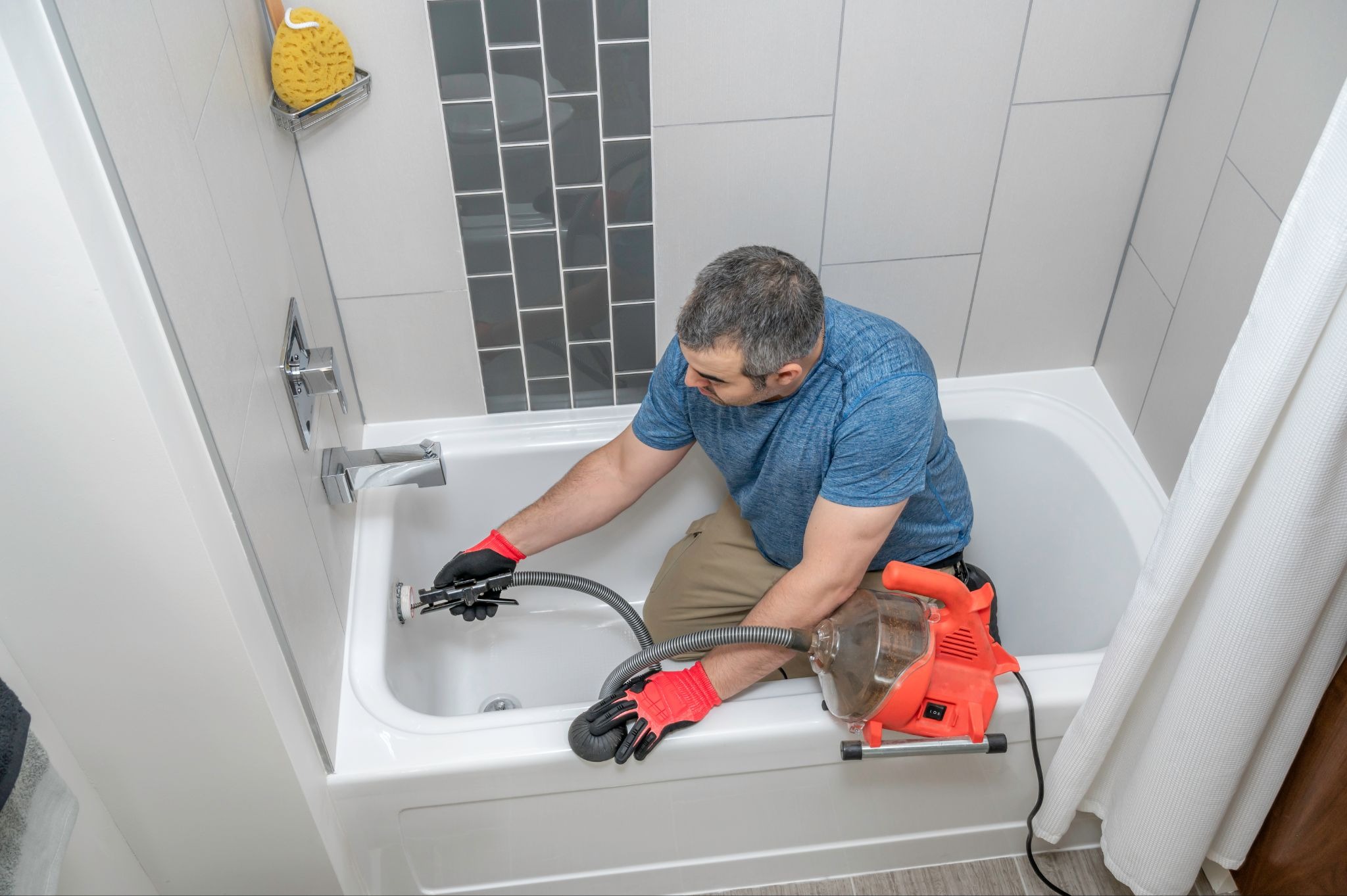
A drain snake is a long, flexible steel cable with a specialized cutting head. A heavy-duty electric motor spins the cable as it pushes down the pipe, breaking up clogs or wrapping around obstructions so the plumber can pull them out.
Hydro-jetting acts like a high-powered pressure washer for the inside of your plumbing. It uses intense blasts of water to scour the pipe walls completely clean.
Why You Should Never Rely on Store-Bought Chemical Cleaners
When a sink starts running slow, the first thing most people do is grab a bottle of liquid drain cleaner from the hardware store.
Put the bottle down. These chemical cleaners cause far more harm than good.
Liquid drain openers rely on lye, bleach, or heavy acids to melt whatever is blocking your pipe. The chemicals generate intense heat in the process. That boiling chemical reaction can warp plastic, eat through rubber seals, and corrode galvanized steel from the inside out.
Worse, those chemicals rarely clear a complete blockage. The acid just sits on top of the clog, pooling inside your pipes. When you finally call a plumber, the technician now has to open a pipe filled with toxic, caustic water. What started as a simple snaking job can quickly become a costly pipe repair.
How to Extend the Time Between Professional Cleanings
You can’t control the age of your pipes or the minerals in city water, but you can control what goes down your drains every day.
Use mesh drain screens in every shower, bathtub, and sink. These inexpensive stainless steel baskets catch hair, soap slivers, and food scraps before they ever enter the pipe. Empty them into the trash once a week.
Never pour warm bacon grease, cooking oil, or meat drippings down the kitchen sink. Oil liquidizes when hot, but it solidifies into a sticky sludge the second it hits the cooler pipes under your house. Pour grease into an old can, let it harden, and throw it in the trash.
Instead of harsh chemical drain openers, use a monthly enzyme-based biological drain cleaner. These products contain natural bacteria that eat organic waste, soap scum, and grease buildup without damaging your pipes or your septic system.
Your toilet is designed for two things: human waste and standard toilet paper. Never flush paper towels, facial tissues, feminine hygiene products, or so-called “flushable” wipes. Despite what the packaging says, those wipes do not dissolve in water. They bunch up inside your sewer line and create dense, difficult blockages.
Ready to Get Your Drains Flowing Again?
A stubborn root clog or a sewer backup does not have to ruin your weekend or your holiday. At Best Service Plumber, we have been serving homeowners across Corona, Riverside County, and Orange County with honest, skilled residential plumbing service. We offer true 24/7 Emergency Services to get your wastewater flowing safely again day or night, no matter when trouble strikes.
Frequently Asked Questions
1. Can running a mechanical drain snake damage my pipes?
If used correctly by a trained professional, no. Modern drain snakes feature flexible cables and specialized cutting heads designed to navigate pipe bends without damaging pipe walls. However, if an untrained person uses an aggressive industrial auger inside old, brittle clay or rusted galvanized steel pipes, the heavy spinning tip can easily punch a hole through weakened metal or ceramic.
2. How long does a typical professional drain snaking take?
For a standard indoor drain like a clogged kitchen sink or a slow bathroom vanity, the entire process usually takes between 30 to 60 minutes from setup to cleanup. Clearing a major tree root invasion from a 100-foot underground main sewer line can take one to three hours, especially if we perform a before-and-after camera inspection to verify the line is fully clear.
3. What is the difference between a standard drain snake and a toilet auger?
A toilet auger is a short, specialized tool designed specifically for toilets. It has a rubber or plastic sleeve at the base that rests against the porcelain bowl so the spinning steel cable doesn’t scratch or chip the toilet’s finish. A standard drain snake should never be pushed through a toilet bowl the raw steel will permanently scar the visible porcelain.
4. Will snaking get rid of tree roots permanently?
No. Mechanical snaking clears the pathway and lets water flow again, but the root system remains alive outside the pipe. Roots will naturally grow back through the cracks over the next 12 to 18 months. To address roots permanently, you either need to line the interior of the pipe with epoxy resin or replace the damaged pipe section entirely.
5. How much does professional drain snaking usually cost?
The cost depends on the location and severity of the clog. Clearing a basic secondary drain line such as a bathroom sink or tub is often between $150 and $250. Clearing a main sewer line clog that requires removing cleanout caps and running 75 feet of heavy-duty cable usually ranges from $250 to $450. We always provide a firm, written quote before starting any work.
6. Why does my sink drain great for two weeks after snaking, then clog up again?
If a drain clogs right after being snaked, you are usually dealing with heavy grease sludge or a sagging pipe. A mechanical snake can punch a hole in soft kitchen grease, temporarily allowing water to drain. But once the cable is pulled out, the thick grease slowly collapses back into the hole, sealing the pipe again. For heavy grease buildup, hydro-jetting is required to physically scour it from the pipe wall, contact our team today for a service call.